When creating a visual display to coordinate with a store’s theme or promotion, there’s always the challenge to design something a little different than what has been done before by countless other companies. Without going too far off into left field and losing the customer.
Of course the London retailer Harvey Nichols is famous for their window displays, and this fun take on the back-to-school theme is no exception!
This display uses all the elements of classic design with their signature twist. While there is no obvious “Back To School!” signage, the details convey the scene without needing to be obvious. The white background with the graph paper lines adds fun texture and a banal canvas from which the other features can pop. The placement of the models keep the scene balanced and creates a visual flow for the viewer. Especially creative is the mirroring of the color bright yellow on the left in the clothing and on the right via a prop. The slightly stylized mannequins depict the awkwardness of middle school and teen years. Different personalities come through in the use of the mannequins, as well.
The contrasting proportions add interest and even hint at the priorities of a teen: I have MONEY! Can I use my calculator? And when is class over?? are all the typical quandaries of the student. The bright lighting is reminiscent of the classroom. And the overall busyness of the display reflect upon the untidy state of the average teen-ager’s bedroom.
The whole thing works together to subtly convey the complex interplay of the school social scene, with a hint of awkwardness, messiness and the desire to stand out while blending in. All with a hint of irony that the parents can appreciate about the “drama” of school that will quickly fade as one enters the adult world. This display meets the goal of creating a well-recognized theme, but with a creative and memorable interpretation.
When starting on one’s own first retail business, there’s so much to do! Deciding a product line, securing financing, opening accounts, finding reliable suppliers who will work with you terms that match your situation, securing your retail space, finding help (if you can), and outfitting your point of cash system are all exciting and challenging tasks. You’re almost there: First orders of inventory are in, store is furnished, ribbon-cutting scheduled, promotion plan in place, lights are on. It’s go time!
Week one. Week two. Week three. Customers come through your space, some of them even pick up and handle the merchandise, there’s an occasional selfie, but so many of them just leave without purchasing. You have a great product line, you’re friendly and attentive, your prices are on-point…what is going wrong?
The first thing to consider is your merchandising: How are your items displayed? No matter how wonderful your product line is, if it is not presented to the customer in an appealing manner, it will not inspire sales.
Keep in mind the public can be very specific in their expectations of a retail establishment– if the place they are in does not match all of their pre-conceived notions of what that space should entail, they will not bite, like a spooked fish.
What does that mean? It means that piling as much merchandise as possible, in no particular order or compartmentalization may be what’s expected at a garage sale, but not at a retail shop. And if customers are getting a garage sale vibe, they will not lay down cash for you.
Don’t look like a garage sale!
At a real, professional shop, customers expect to see real, professional merchandising. This means there must be a plan in place and an intentional design and theme. The shop must have a consistent mood or tone, a personality that customers will come to instantly recognize as unique.
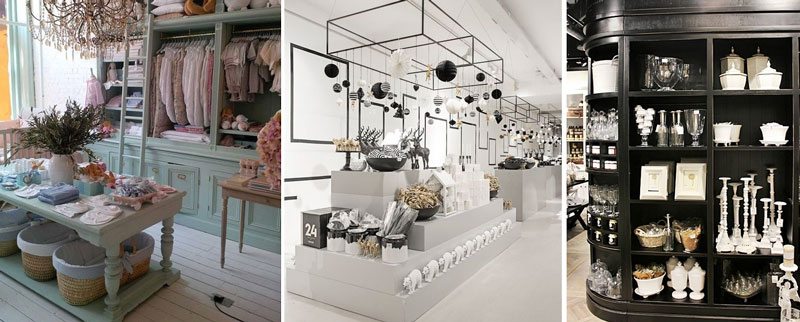
Generating a theme will help you keep the details complimentary and supportive of the that vision. Paint colors, any interior textiles, lighting, a color palette all work in concert. One of the most important features in a shop is fixtures. Racks, tables, shelving units, benches, wall hooks are some examples. They are anything you would use to hold, support, prop and display items for sale. While they become virtually invisible to the shopper under the weight of all that merchandise, they still silently contribute to the theme of the shop, as well. Choosing the right style and type of fixtures can really bring the store and its products to life!
When choosing fixtures, it is important to first know what sort of vibe you want you shop to have. There is an amazing variety of fixture styles, with more being developed all the time. One can choose from country style, urban, industrial, whimsical, modern, classic, the list goes on. Materials for construction range as well, from wicker, wood, and natural cording like jute and sisal, to Formica, metal, plastic, acrylic, etc. Your store theme will decide the materials best suited.
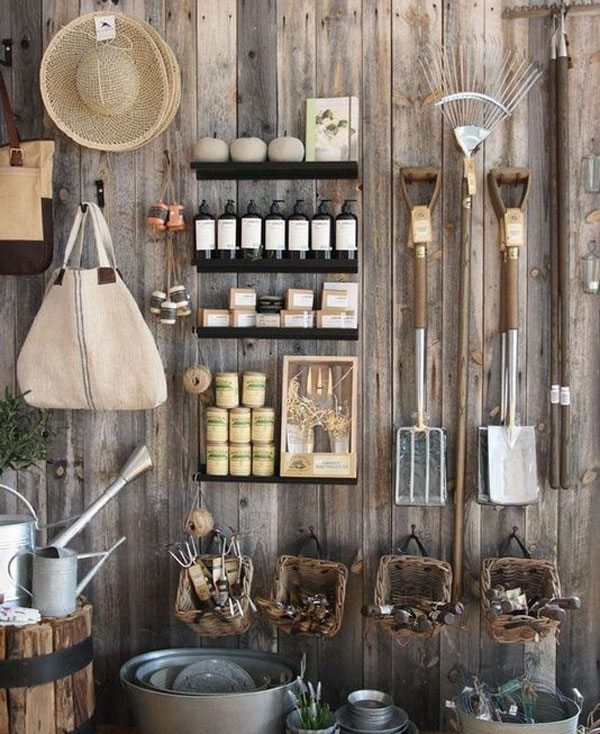
What atmosphere will your shop project? Fitsmallbusiness.comA country style mood is created with wood, wicker and galvanized metal containers. Simple hangers are made from wrought iron-look hooks and nails. Fitsmallbusiness.com
The next step in choosing fixtures is to take an objective look at what you’re selling. Is it clothing, accessories, or cookware and dishes? Sporting goods? Books? All of these items benefit from different display tactics and need their own fixture to achieve this look. Research a some ideas for your particular product, finding solutions for your product, budget, and spacial allotment.
Different product lines need the display to highlight different aspects. People shopping for books want to be able to find their choice in a quick and organized system, but also have the opportunity to see the covers and find new choices to buy. Books need shelving and some table space. It keeps the plan interesting to vary the height, and children love to browse their choices laying flat on low tables. A bookstore will also need places to sit and the appropriate lighting; bright enough to read, but not so bright to make the space difficult to relax in.
Fixtures organize and display the books, seating invites one to linger, and the lighting is intimate but sufficient to read without strain. The overall theme is modern. Pinterest.com
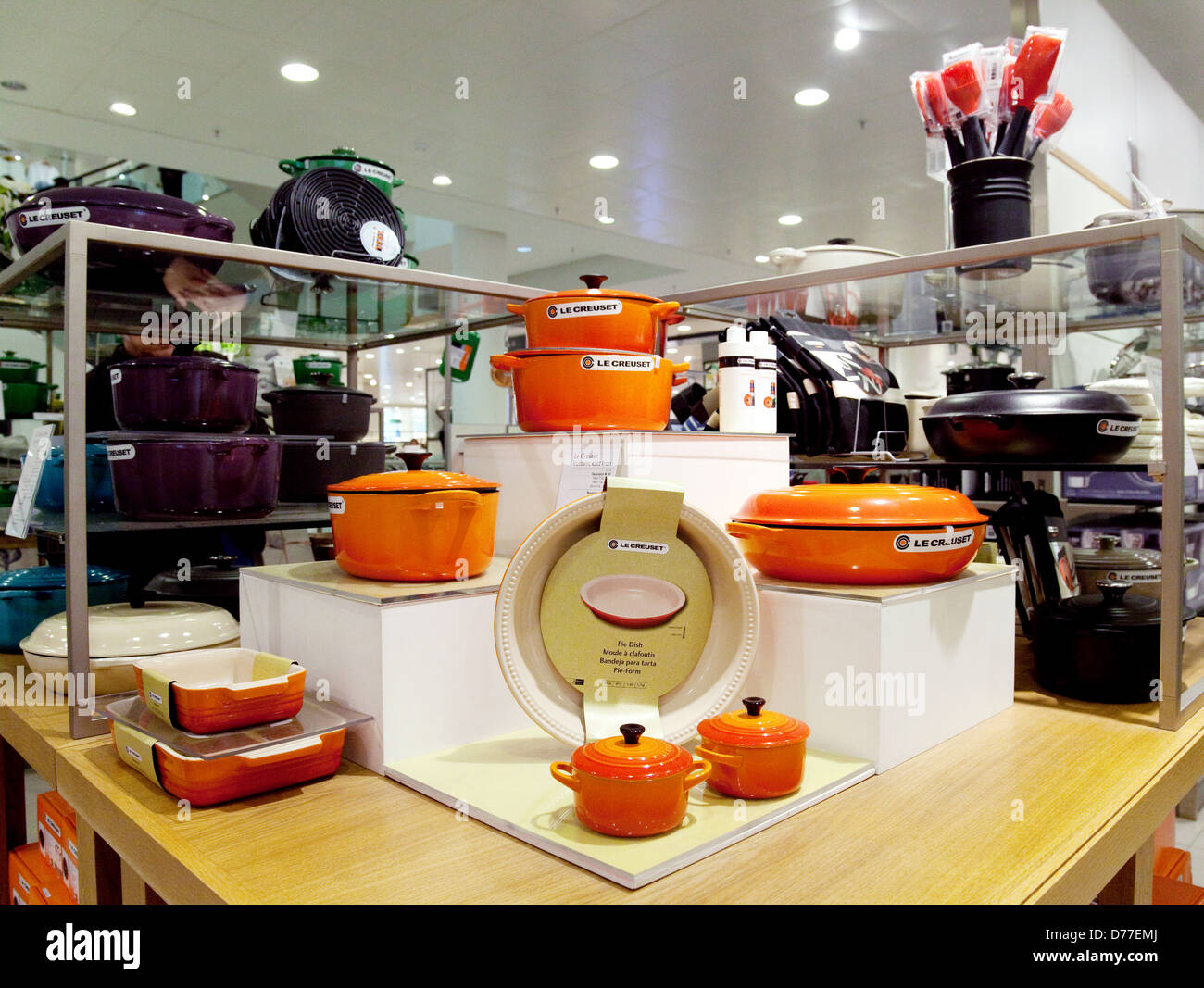
Cookware will shine with display materials that match the style of the dishes or pots and pans. Are they a modern design? Retro print? Rustic cast iron? Any of these can be matched to a style of fixture. Again, you’ll want to think about how to best merchandise each item. Dishes might be stacked on a platform or hutch in a creative configuration, or set as places on a make-shift table with matching linens and decorator items. Cookware looks wonderful on an old stove! But if space and /or budget don’t allow, arranging them on a table with risers or stands to vary the height will create interest, as well.
Change up the height of the display to add interest. Alamy.com
Clothing may seem like a no-brainer, but even here subtle differences can help generate sales. In addition to hanging garments on racks, turning some of them to face out can help the customers see them better. Whether you have mannequins or not, compiling outfit suggestions will greatly increase the likelihood of a purchase. Laying or folding clothing on a table or in shelving is common, but don’t for get that this display method is easily disrupted by the customer will require maintenance. Be realistic with how much time you have during the selling day to keep up with straightening before deciding to rely heavily on shelving.
This display tactic is asking for trouble. If you must do this, be prepared to maintain it constantly, or it will turn customers away. Falconerelectronics.com This simple display uses racks, mannequins, shelves and tables and is easy to keep neat. https://www.storesupplyblog.com
Accessories such as jewelry, hats, scarves, handbags, hosiery, etc. benefit from a variety of different display fixtures. The point is to demonstrate each particular item very similar to how it would be actually used to inspire shoppers to take them home.
There are a variety of interesting ways to display accessories. Just be sure you are matching the overall theme of your shop! https://serrvartisans.wordpress.com
In your store, display tactics act as silent, unobtrusive salespeople who give customers a nudge when they are making their purchase decisions. You cannot be everywhere at once, and your merchandising scheme will be your extra hand and voice for you throughout the store.
Purchasing fixtures is an investment. Like any items, if you take the time to shop around and price compare, look for discounts, even find creative make-shift ideas, you can save a good deal of money. Just take the time initially to really know what you’re looking for, know your shop’s style, and imagine ways that fixtures can be versatile and dual-purpose. Always research ideas to see how others have solved their own merchandising challenges.
With the right merchandising plan that makes clever use of fixtures, you are far more likely to succeed with your new retail venture. Best of luck!





 Lessons in Modern Marketing